What Is Soft-Touch Lamination? And When It Is Worth It
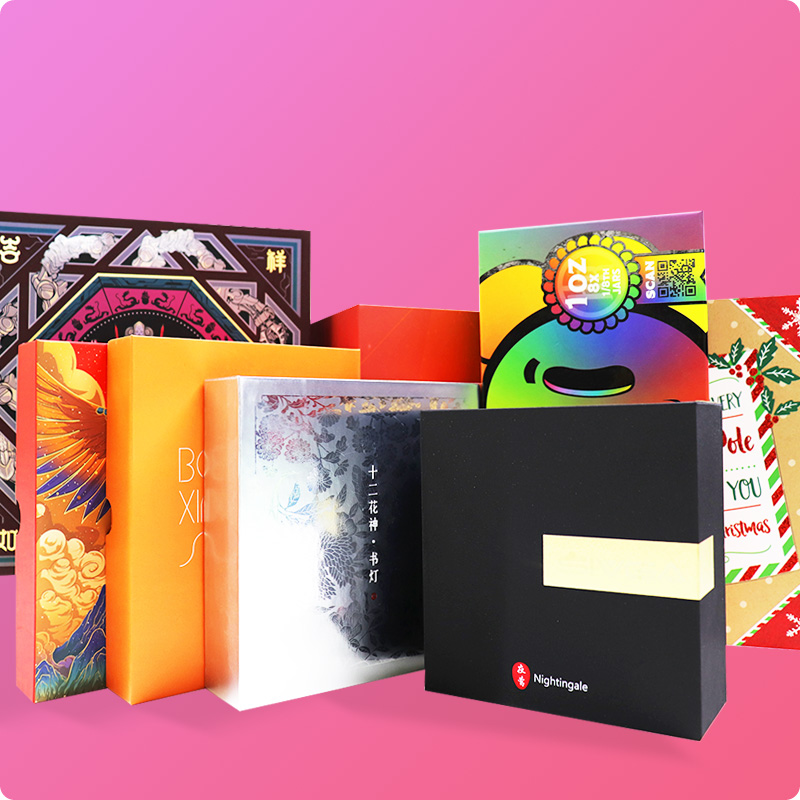
Run your hand across the lid of an expensive skincare set and you will understand soft-touch lamination before anyone explains it: a surface that looks deep matte but feels like velvet — somewhere between suede and a fresh playing card. Soft-touch lamination is the fastest-growing premium finish we run, and it is also the one buyers misunderstand most: they know they want “that feel”, but not when it earns its cost and when it is wasted.
Here is the full picture from the laminating line: what it is, what it does, what it costs, and the four situations where we recommend it without hesitation.
What soft-touch lamination actually is
Lamination is a thin film bonded over printed board, and it comes in three families: gloss (shiny, wipeable), matte (flat, no sheen) and soft-touch (matte plus a tactile coating that reads as velvet). Soft-touch film is a few microns thicker than standard matte, with a micro-textured surface that scatters light completely and feels soft because the texture sits below the threshold of individual ridges — the same reason suede feels soft.
Two practical details most guides skip:
- It is a physical film, not a liquid coating. That means consistent texture across the whole sheet, and it runs on our automatic film-laminating machine as a standard pass — no exotic setup, no minimum-quantity penalty beyond the film itself.
- It changes color perception slightly. Soft-touch deepens and warms printed colors versus gloss; dark navy and black look richer, while pale pastels can look slightly muted. Proofing on the real laminate (which we do on every pre-production sample) settles it before the run.
What it does: three jobs in one pass
Look. Soft-touch kills glare completely. Under retail lighting or a phone flash, the surface stays deep and even — which is why beauty and electronics brands default to it.
Feel. The velvet texture is the single cheapest way to make a box feel expensive. Perceived-value research aside, the practical version is simpler: customers stroke the box. It happens on every unit, every time.
Protection. This is the underrated job. Soft-touch film resists fingerprints, scuffs and edge whitening — the three failures that make a box look shop-worn after a courier journey. On dark board (black card, deep navy), where every scuff shows, it is close to essential. The film also adds a small amount of stiffness to the panel, sharpening tuck-flap edges.
The honest cost picture
Soft-touch lamination adds a modest per-unit cost over standard matte — a fraction of foil stamping, and far below the cost of changing structure or board weight. On a 1,000-piece carton run it is rarely the difference between a good and bad budget. The real costs are elsewhere:
- Write-offs on design changes. Film is applied to the printed sheet; a artwork revision after lamination means reprinting. Lock artwork before the laminating pass.
- Glue-line discipline on rigid boxes. Soft-touch film is non-porous, so wrapped rigid boxes need the right adhesive application — which our automatic gluing lines handle, but it is a real process note for any factory you choose.
- Spot UV pairing adds a pass. The classic premium combo is soft-touch base + gloss spot UV logo: the contrast is striking, but it is a second pass on the press schedule.
When it is worth it: four cases we recommend without hesitation
- Rigid gift boxes shipped solo to consumers. The box is the first product moment, and it arrives after days in a courier network. Scuff resistance plus velvet feel is exactly the job — the standard spec on our rigid gift boxes.
- Dark-colored packaging. Black, navy and deep green board show every scuff and fingerprint. Soft-touch keeps them looking fresh from shelf to doorstep.
- Beauty, skincare and premium electronics. Category expectation at this point — buyers subconsciously associate the texture with quality, and its absence reads as economy.
- Boxes designed to be kept. Subscription kits, VIP gift sets, wedding favors — if the box’s second life is storage or keepsake, the finish that survives handling is the finish that keeps selling.
When to skip it
Budget retail cartons where price is the product’s selling point. Food packaging with heavy grease exposure (ask about barrier coatings instead — different problem, different solution). And small runs where the design is a pale, high-key pastel: the muttering effect on light colors is real, and matte lamination without the tactile layer may suit the artwork better. The honest test costs nothing — we produce pre-production samples on the real laminate so the decision is made in your hand, not in a spec sheet.
One specification trap to avoid: “soft-touch” exists as both a film and a liquid coating, and they wear differently. The film bonds a full layer over the sheet — more durable, more scuff-proof, slightly higher cost. Liquid soft-touch coatings are cheaper per unit but the effect can burnish and lighten on edges after handling. We default to film on anything that travels; ask which one a quote assumes, because the word “soft-touch” alone does not tell you.
Soft-touch is not only for rigid boxes
The finish translates to corrugated through litho lamination: print CMYK on the liner, laminate — soft-touch in this case — then mount on E-flute. The result is a mailer with a velvet wall that still survives the courier, which is why offset-laminated soft-touch E-flute is the subscription-box premium spec. The lamination pass also deepens laminated-top finishes: spot UV and foil register against the film exactly as they do on folding cartons.
The combo that outsells the rest
For premium rigid boxes, the combination we produce most is soft-touch lamination as the base, one hot-stamped foil element, and spot UV on the photographic panel. Velvet base, metal logo, gloss accent — three sensory signals in one pass planning. It is priced as a finish set in our quotes so you can see exactly what each layer adds, and it is the reason our finishing library exists as a menu rather than a fixed package.
Ready to feel the difference? Request a sample — soft-touch against standard matte, on your real dieline, before you commit the run.